Selection of refractory materials for shuttle kilns
Currently, shuttle kilns are widely used in the ceramics, refractory materials, electrical porcelain, and building materials industries. Modern artistic and daily-use ceramics are also fired using shuttle kilns. During operation, the temperature, atmosphere, pressure, and various flow rates within the kiln often change due to external conditions or internal factors. The appropriate selection of refractory materials within the shuttle kiln is crucial for ensuring kiln quality. Currently, the inner linings of gas-fired shuttle kilns used in the ceramics industry can be roughly divided into the following three types:
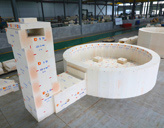
The innermost layer of the shuttle kiln lining is made of 230mm thick lightweight insulating refractory bricks, the outer layer uses 70-100mm thick ordinary alumina silicate fiber material for insulation, and the outermost layer uses a welded steel frame with steel plates to protect the internal refractory materials. The top of the shuttle kiln is an arched structure built with wedge-shaped bricks, using high-alumina or mullite lightweight insulating materials. Besides consuming slightly more fuel during firing compared to the first type, this material, when used as the inner lining of a gas-fired shuttle kiln, is essentially comparable to an all-fiber kiln, especially when using better lightweight insulating materials.